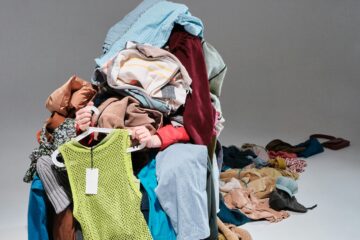
It’s hard to argue with a $10 dress or a $15 sweater.
Affordable clothing feels convenient. Sometimes, it even feels necessary. But behind those low price tags is a reality most of us rarely see — one that stretches far beyond fitting rooms and online carts.
Cheap clothing is rarely cheap for everyone.
Fast fashion is one of the clearest examples of how hidden costs show up in everyday purchases — but it isn’t the only one. From the coffee we drink to the home goods we decorate with, many products carry unseen human and environmental impacts. Clothing simply gives us a visible place to begin.
The Human Cost of Fast Fashion
The fast fashion industry is built on speed — rapid production cycles, constant trend turnover, and extremely low labor costs. Brands can release new styles in weeks instead of seasons (Thomas, 2019). That speed increases consumption — but it also increases pressure on garment workers.
Low Wages & Child Labor in the Garment Industry
Globally, the fashion industry employs more than 60 million people, many of whom are women in developing countries (Joy et al., 2012). In many fast fashion supply chains, workers earn wages that do not meet basic living standards and often work in unsafe conditions.
Child labor continues to persist in parts of fast fashion supply chains, particularly in subcontracted and poorly monitored production tiers (James, 2022). Disclosure laws exist, but enforcement gaps allow violations to continue.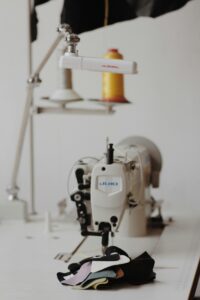
When clothing is sold at extremely low prices, someone else absorbs the cost.
Often, it’s a woman working excessive hours for low pay.
Sometimes, it’s a child.
The humanitarian impact of fast fashion remains largely invisible to consumers — and the system depends on that invisibility (Bernard, 2023).
Unsafe Working Conditions in Supply Chains
Low wages are only part of the story.
Factory environments in some regions have been linked to unsafe structural conditions, excessive overtime, and lack of labor protections. The pressure to produce quickly and cheaply creates environments where worker safety is compromised.
Because production is frequently outsourced across multiple tiers of suppliers, accountability becomes difficult to trace. Gaps in transparency allow unethical practices to persist beyond public view (James, 22).
The clothing may look polished on the rack.
But the conditions behind it often are not.
The Environmental Cost
Fast fashion also contributes significantly to environmental degradation. Textile production is water-intensive, chemical-heavy, and waste-generating (Joy et al., 2012). Many garments are worn only a few times before being discarded, accelerating landfill waste and resource depletion.
 Still, while environmental harm is serious, the human cost deserves equal attention.
This is not only about sustainability.
It’s about dignity.
Why Ethical Fashion & Conscious Shopping Matters
Ethical fashion and conscious shopping aim to address these hidden costs by prioritizing:
- Fair wages
- Safe working conditions
- Transparent supply chains
- Responsible sourcing
When consumers begin to value these standards, brands respond. Platforms like Good On You & their ethical rating tool (click here to learn how it works) are helping bring that awareness & accountability to brands.
This doesn’t require perfection. It doesn’t require replacing your entire wardrobe overnight. Ethical shopping begins with awareness — understanding where clothing comes from and who makes it.
Awareness leads to intention.
Intention leads to change.

Choosing Something Better
Shopping is not just transactional — it is participatory. Our spending quietly signals what we are willing to accept.
When we choose fewer, higher-quality pieces…
When we support brands that disclose their labor practices…
When we ask questions about sourcing and wages…
We shift demand.
Ethical fashion is not about guilt. It is about alignment — aligning our everyday purchases with our values.
And these ethical concerns don’t stop with clothing. Many industries — including food production, coffee sourcing, home goods manufacturing, and household products — operate within similar systems of low wages, unsafe conditions, and environmental strain. Learning to ask better questions in one area empowers us to ask them everywhere.
The first step is awareness.
The next step is choosing better.
That’s why Good Maker Market exists (check out our About Me blog) — to make ethical shopping clearer, more accessible, and less overwhelming across every category of everyday life.
You don’t have to do everything.
You just have to begin.
Sources & Further Reading
Thomas, Dana. “The High Price of ‘Fast Fashion.’” Wall Street Journal, 2019.
James, Madeline. “Child Labor in Your Closet…” The Journal of Gender, Race & Justice, 2022.
Joy, Annamma, et al. “Fast Fashion, Sustainability…” Fashion Theory, 2012.
Bernard, Alexandra L. “The Hidden Costs Behind Cheap Clothing…” Vanderbilt Journal of Entertainment and Technology Law, 2023.